Marinas we dive · Destin
Destin Marina, and the water it lives in.
At the Destin bridgeChoctawhatchee BayDestin
Marinas we dive · Destin
The water
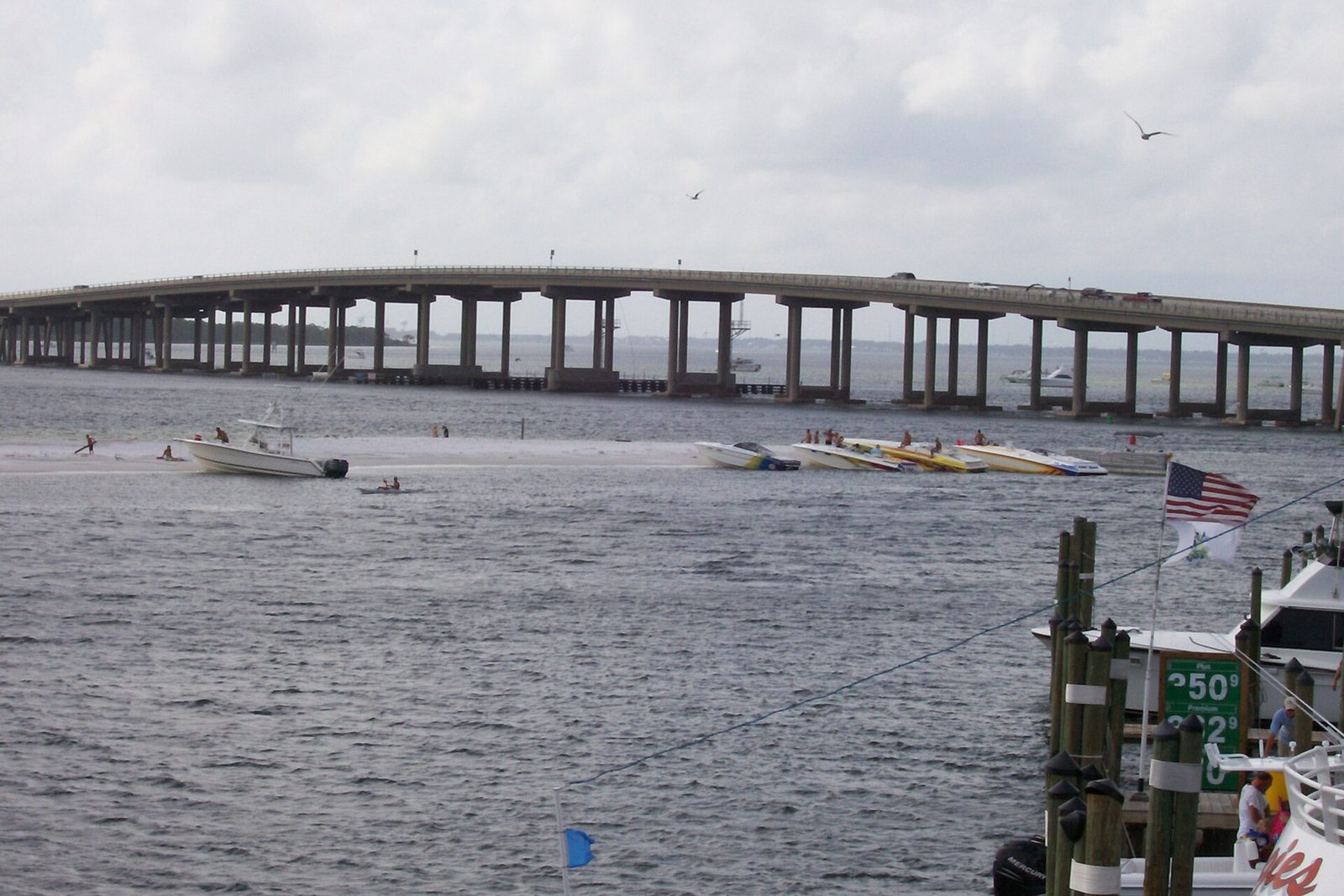
Destin Marina sits on the north side of the Destin bridge, facing Choctawhatchee Bay. Its launch puts a boat a short run from Crab Island and the Gulf.
East Pass is the only outlet from the bay to the Gulf. Everything the tide moves in or out of a bay more than thirty miles long goes under this bridge.
Few slips anywhere on this coast see more water go by.
Every tide that fills a thirty-mile bay runs past these ten slips. Nothing here sits in still water.
Destin Marina, DestinDestin Marina lies at the north foot of the Destin bridge, on the bay side of East Pass. No marina in the area sits closer to the inlet, and that distance is the single best predictor of how fast a hull fouls here.
Right at a pass, tidal exchange is at full force. Growth is dominated by hard shell, and bare metal takes it first.
With ten slips and a 30-foot limit, this is a small-boat marina on fixed docks. Small boats near strong current tend to foul fast on the lower unit and trim tabs.
Timeline
A fishing captain from New London, Connecticut settles on the peninsula and begins working East Pass.
The settlement, known until then as East Pass, gets a post office and takes the name Destin.
A bridge over East Pass ties the fishing village to the rest of the coast by road.
The first Destin Fishing Rodeo is held to draw visitors in the slow season. It has run every October since.
The first condominiums go up, and the waterfront starts filling with pleasure boats alongside the working fleet.
The fishing village becomes a city.
Destin claims the largest fishing vessel fleet in Florida, and East Pass is dredged often to stay navigable.
Things worth knowing
Distance to the nearest inlet is the strongest single predictor of fouling rate. Destin Marina sits at the north foot of the Destin bridge, right on East Pass.
Destin, on Choctawhatchee Bay at 7 Calhoun Ave, on the north side of the Destin bridge. Well within our regular run.
Growth on the Emerald Coast is not linear. Summer water drives the fastest growth of the year and winter slows it. A cadence set for August will be wrong in January.
Bare metal fouls faster than painted surface everywhere on this coast. Props, shafts and struts usually signal the timing before the paint does.
Dolphins, sea birds and grass beds share Choctawhatchee Bay. Method matters as much as schedule — media matched to the paint, and nothing scoured into the bottom.
Ten slips on fixed docks, for boats to 30 feet, with a launch used for Crab Island and the bay. A small marina with a steady set of small boats.
From the diver
Choctawhatchee Bay is a long estuary with one outlet to the Gulf at East Pass. Near the pass the water is salty and well flushed. Farther up the bay it is calmer and carries more fresh water from the creeks and rivers that feed it.
Position decides the growth. A slip with open bay in front of it flushes on wind and tide. A slip tucked into a basin or behind a point holds its water longer, and soft growth builds there first.
The answer is a schedule matched to the slip, not to the calendar. We set the first interval, look at what the hull carries when we come back, and tighten or relax it from there.
Gallery
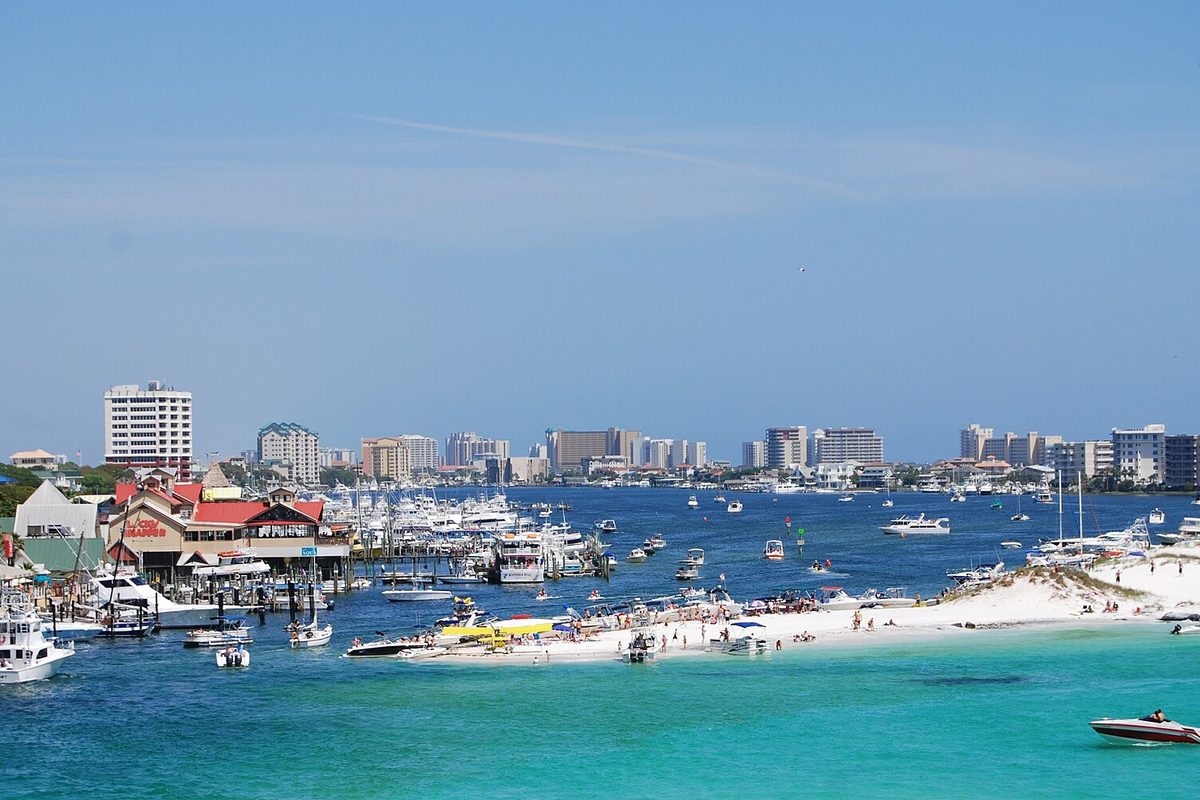
We dive Choctawhatchee Bay and know how it behaves through the season. Tell us the boat and the slip and we’ll send a number and a cadence that fits the water it actually sits in.